
Home / La Revue Dafee/ Estrogen drop
Estrogen drop: why your cholesterol rises and your skin dries out at the same time.

What is the connection between estrogen, cholesterol, and skin dryness?
Estrogen regulates both hepatic lipid metabolism and cutaneous lipid production simultaneously. When estrogen declines — gradually from age 40, more sharply during perimenopause — LDL cholesterol rises and skin dries out at the same time, because both are expressions of the same underlying hormonal mechanism.
The cardiovascular system and the skin are studied by different doctors, in different consultations, with different treatments. This specialisation has produced remarkable results — and one significant blind spot.
This is not a coincidence. It is lipid biology.
How does estrogen affect cholesterol?
Estrogen increases the expression of LDL receptors on liver cell surfaces, which capture and clear LDL from the blood. When estrogen declines, these receptors function less efficiently and LDL accumulates — independently of diet or lifestyle. A study in Maturitas found postmenopausal women had 10% higher total cholesterol and 14% higher LDL than age-matched premenopausal women.
Menopausal status is associated, independently of aging, with elevations in total cholesterol, LDL cholesterol, apolipoproteins, and triglycerides, and decreases in HDL cholesterol.
A comparative study published in Maturitas found that postmenopausal women had significantly increased total cholesterol by 10%, LDL cholesterol by 14%, and apolipoprotein B by 8.2% compared to age-matched premenopausal women.
This is not primarily a question of diet or sedentary lifestyle — although these factors play a role. It is first and foremost a hormonal and lipid question.
How does estrogen affect the skin barrier?
Estrogen regulates sebum production, which forms the hydrolipidic film that retains skin moisture. When estrogen declines, sebum production slows and ceramide levels drop — a 2022 study in Scientific Reports found postmenopausal women had significantly lower ceramide levels with shorter chain length, directly correlated with serum oestradiol.
But there is more. A study published in Scientific Reports in 2022 measured stratum corneum lipids in pre-menopausal, post-menopausal and HRT-treated post-menopausal women. Post-menopausal women showed significantly lower ceramide levels with shorter average chain length. Serum oestradiol correlated with ceramide abundance and length.
Ceramides are one of the three major components of the skin barrier — alongside cutaneous cholesterol and free fatty acids. When their production declines, the barrier collapses structurally.
The same mechanism, two expressions
Here is what siloed medicine does not see:
Estrogen regulates lipid production in two systems simultaneously — the liver (blood cholesterol metabolism) and the skin (cutaneous lipid synthesis). When it declines, both systems are lipid-deficient at the same time.
It is not a coincidence that your lipid panel deteriorates at the same moment that your skin dries out. It is the same biological signal — a systemic lipid deficit — expressing itself in two different organs.
Elevated LDL and persistent dry skin are two visible manifestations of the same underlying imbalance.
What this changes for your approach
This understanding has practical implications.
For cholesterol: omega-3 fatty acids — particularly alpha-linolenic acid (ALA) — contribute to the maintenance of normal blood cholesterol levels. This claim is validated by the European Food Safety Authority (EFSA, EU Regulation 432/2012). Polyunsaturated omega-3 fatty acids, when they replace saturated fats in the diet, improve the functioning of hepatic LDL receptors.
For skin: essential fatty acids — ALA omega-3 and linoleic acid omega-6 — are direct structural components of the skin barrier. They cannot be synthesised by the body and must be provided through diet or topical skincare. An oil rich in these fatty acids, applied to clean, slightly damp skin, helps restore the lipid component of the skin barrier.
Sacha inchi oil contains approximately 45% ALA omega-3 and 35% linoleic acid omega-6 — two essential fatty acids that the skin barrier is structurally made of, and which simultaneously contribute to the maintenance of normal cholesterol when consumed.
One ingredient. Two systems. One shared biology.
What the research says about essential fatty acids and skin after menopause
Essential fatty acids — like the omega-3s found in salmon, walnuts, or plant oils — help produce the skin's oil barrier, vital for retaining moisture.
A review published in Skin Pharmacology and Physiology showed that polyunsaturated omega-3 fatty acids play a structural role in cutaneous keratinocyte membranes and influence the lipid composition of the corneal barrier — exactly the barrier that degrades after menopause.
At Dafee, we built two products around this principle.
Daily-Feed — 5ml of sacha inchi oil per day — provides the ALA omega-3 that contributes to the maintenance of normal cholesterol.
Daily-Feel — a few drops of formulated sacha inchi oil — restores the cutaneous lipid barrier from the outside.
The same lipid. Inside and outside.
Recommended reading
-
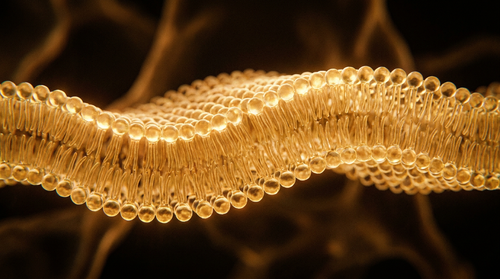
What Are Lipids?
Understanding what are lipids is the first step...
-
Traceability and Cold Pressing: Why the Process Matters | Dafee
-

High Cholesterol in France
Written by the Dafee Science Team — published 05/06/2026. Dafeepédia content is developed from European regulatory sources (EFSA, EC Regulation 432/2012) and peer-reviewed scientific literature, and reviewed for accuracy before publication.
The Dafee Metabolic Intelligence app interprets standard lipid blood panels as metabolic patterns rather than isolated thresholds — available at app.dafee.fr.